
Parking in a parking garage brings out the worst of my anxiety and perfectionism. I have to clock in at work in 20 minutes. I can turn right, go up the ramp to the next floor, and have to spend extra time going down another flight of stairs to get to the exit. Or I can circle around to the far side of this floor and gamble on there being an extra space somewhere–and cost myself even more time if the gamble is wrong. Even in this silly little decision I waver. Maybe it’s a side effect of our data-obsessed lives: I know that, technically, there is an optimal parking garage strategy, and I want to use it. (There’s a reason I’ve thus far refused to get a smart watch.)
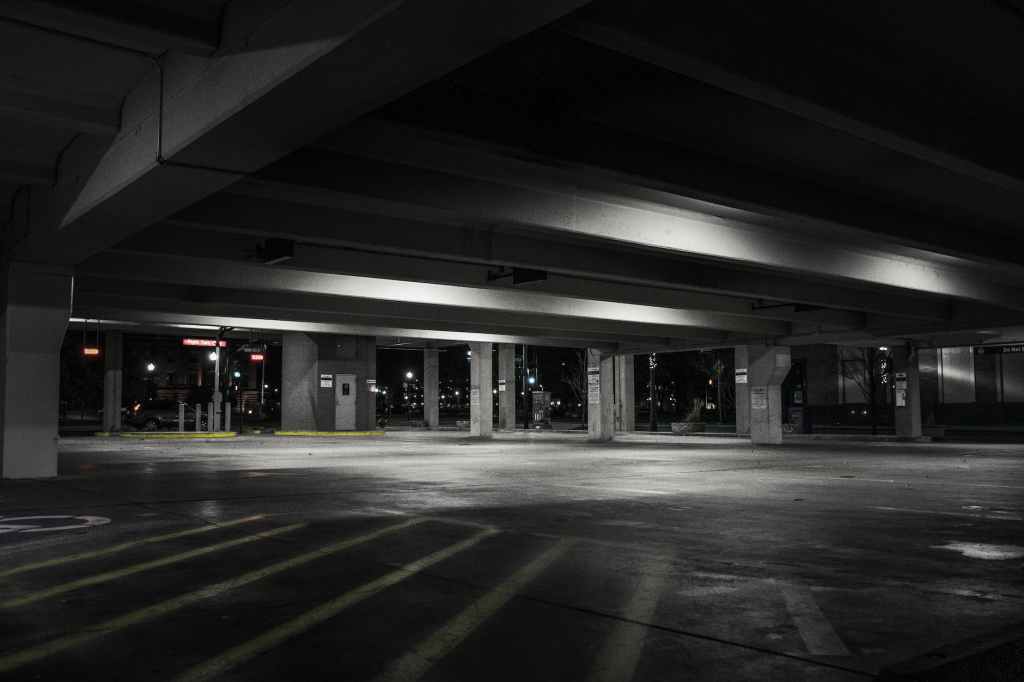
The problem is the people–the people who are present, and their behavior, changes every day. As much as I’d like to break it down into probabilities and timing and how many cars are there, the people factor messes up my whole equation. And there’s nothing to do but live with that.
I wish I could connect my usual parking garage experience to my latest writing breakthrough, but it would be a weak connection at best. I had this latest lightbulb moment on a day where I pulled into the garage, immediately saw a spot, and claimed it with no issue. Not that type of strife that usually brings about artistic genius.
I’ve had my villain for a long time, and she’s always followed a certain pattern: murder a significant supporting character, then come very very close to do the same thing to the protagonist. It’s always in the context of spurned love and power-hungriness, but I could never balance the elements. Was she pretending to be in love in order to grab at power? Was she actually in love? Was power something she always wanted or something she learned to like before it got taken away from her? Either way, she needed motivation for killing not once, but twice.
What I realized was this: killing twice? Not something she wanted to do. After the first killing she is horrified, but she’s in too far over her head to stop there. She’s fallen in with extremists, the kind of people who take the sad and the heartbroken and channel their emotion into wicked things. In these days on the internet, it’s a narrative we’re all to familiar with. In her moment of distress this villain–not really a villain, but an easily-influenced young woman–is targeted by people who have all the power in the situation, and she becomes convinced that they have the answers to her problems. Then, the first death, and she snaps back into reality. But there’s no going back at this point. When she attempts the second murder, she’s determined to see it through, but at the same time she’s desperate. Her tears are real, and in some ways being caught is a relief.
She’s not a one-dimensional woman scorned who is seeking disproportionate revenge. She’s a kid, easily influenced, who is hurt and taken advantage of by people who see how they can use her to accomplish their own ends. And it nearly works.
Maybe I had this epiphany because parking garages make me feel desperate.
 Words Per Mile
Leave a comment