
“What gunpowder did for war, the printing press has done for the mind…”
Wendell Phillips
Today marks 555 years since the death of Johannes Gutenberg, who lived to be somewhere between 62 and 75. We don’t know his exact age because there aren’t great records around from the late 14th century. I wonder if that’s because they didn’t have a way to mass-produce important documents?
Those who recognize the name may recall that Gutenberg is considered the father of the modern printing press. While earlier versions of the press existed in East Asia, Gutenberg made some modifications to the design and was responsible for spreading it around the globe. The advent of movable type allowed the mass production of a variety of documents — sure, you could print the Bible, but then (if you needed to) you could rearrange the letters and print a pamphlet about this newfangled sport called golf.
“Whatever the world is, today, good and bad together, that is what Gutenberg’s invention has made it: for from that source it has all come.”
Mark Twain
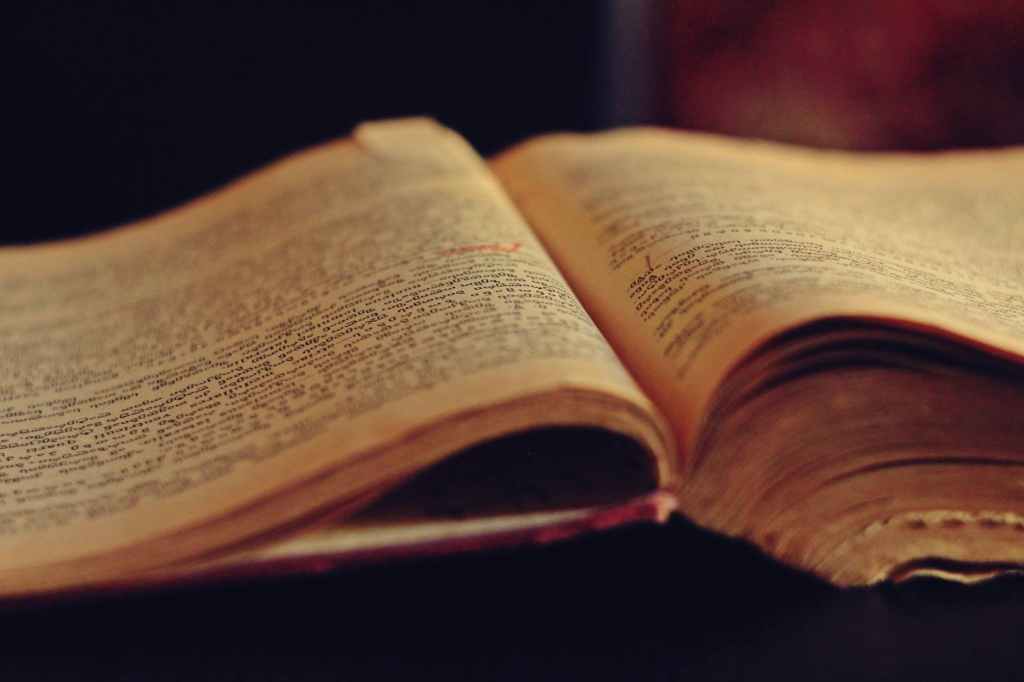
The advent of mass printing changed history, I would argue for the better. Of course, we’re all too aware now of some of the negatives of mass-produced written content; rhetoric can be hateful, untrue, or so convoluted that people struggle to tell “fake news” from the real stuff. But a world with better access to books is a more literate world, and a more literate world is a more educated world.
Well, duh.
But think about the importance of literacy in promoting women’s equality, building a more mathematically and scientifically educated society, and can help improve individuals’ health and financial status. And that’s just the start. Access to information helps build a more prosperous and equitable society.
Today, most of us see Johannes Gutenberg’s name associated with Project Gutenberg. If you haven’t visited this website, I highly recommend doing so. It’s filled with free ebooks (mainly classics and educational material, things that are in the public domain). Project Gutenberg has been running since 1971, bolstered by legions of volunteers who donate, digitize, and check the books in the collection. If you haven’t browsed their catalogue, make today the day that changes.
To read is to have power.
Sources:
Evans, F. (2022, March). Who Invented Golf? History.com. Retrieved January 2023 from https://www.history.com/news/who-invented-golf-origins
Menand, L. (2023, January). When Americans Lost Faith in the News. The New Yorker. Retrieved January 2023, from https://www.newyorker.com/magazine/2023/02/06/when-americans-lost-faith-in-the-news
Newman, M. Sophia. (2019, June). So, Gutenberg Didn’t Actually Invent Printing As We Know It: On the Unsung Chinese and Korean History of Movable Type. LitHub. Retrieved January 2023 from https://lithub.com/so-gutenberg-didnt-actually-invent-the-printing-press/
PLAN International. (2017, March). The importance of education, how literacy improves lives. PLAN International. Retrieved January 2023 from https://plan-uk.org/blogs/the-importance-of-education-how-literacy-improves-lives
Project Gutenberg. (n.d). Welcome to Project Gutenberg. Project Gutenberg. Retrieved January 2023 from https://www.gutenberg.org/
UN News. (2010, September). Literacy has empowering effect on women, UN officials say. UN News. Retrieved January 2023 from https://news.un.org/en/story/2010/09/350122
UN Women. (2012). Commission on the Status of Women 2012. UN Women. Retrieved January 2023 from https://www.unwomen.org/en/news/in-focus/commission-on-the-status-of-women-2012/facts-and-figures
The World Bank. (2019, November). Ending Learning Poverty: A Target to Galvanize Action on Literacy. The World Bank. Retrieved January 2023 from https://www.worldbank.org/en/news/immersive-story/2019/11/06/a-learning-target-for-a-learning-revolution
 Words Per Mile
Leave a comment