
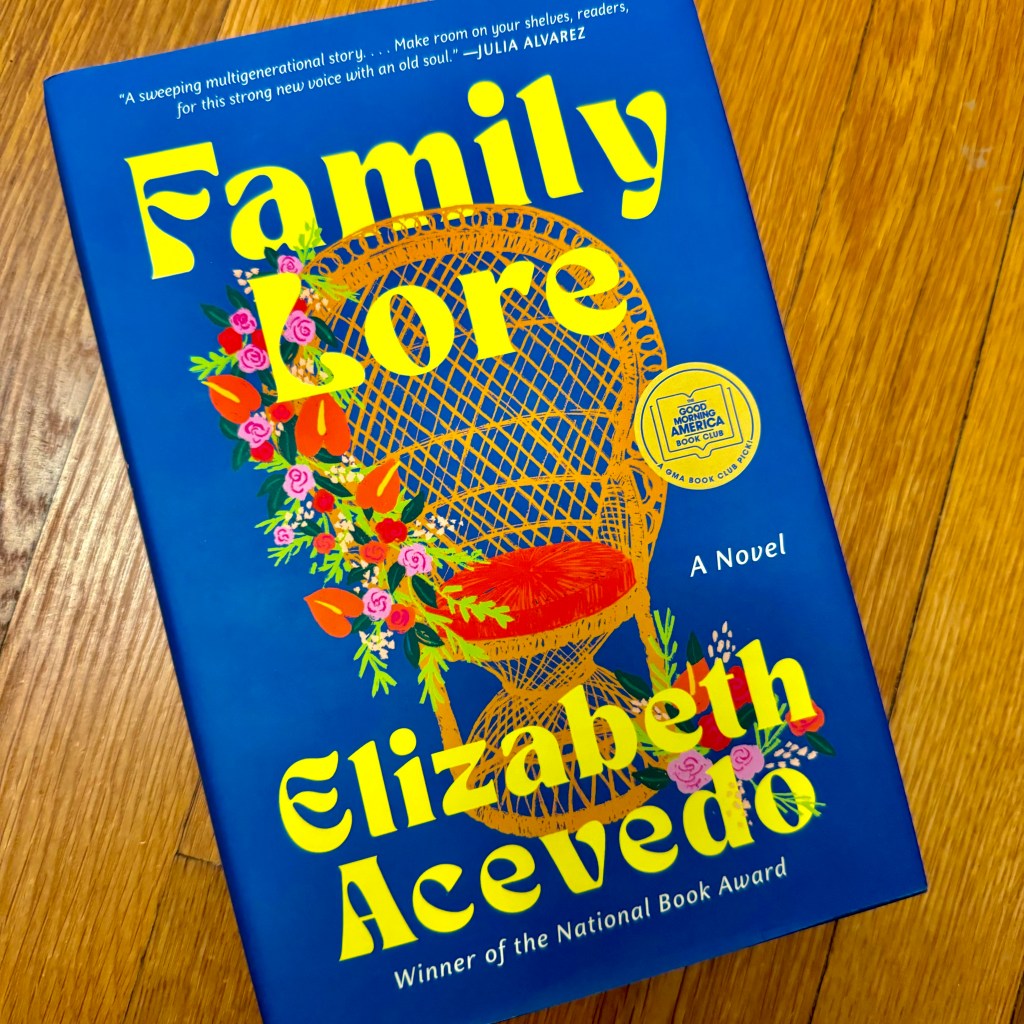
“How do lineages of women from colonized places, where emphasis is put on silent enduring, learn when and where to confide in their own family if forbearance is the only attitude elevated and modeled?”
-Elizabeth Acevedo
Last summer, I had the pleasure of listening to Acevedo speak at a writing conference, and it was wonderful. She was funny, she was intelligent, she was…so much younger than I thought she would be. I make it a habit of not looking at author portraits before I finish the book, so that at the end I can see if my vision of the storyteller matches up. And for someone so young to have written a book like Family Lore blew my mind.
First, let’s start with the first few lines of the official summary, since I think they do a pretty good job of reeling you in:
Flor has a gift: she can predict, to the day, when someone will die. So when she decides she wants a living wake–a party to bring her family and community together to celebrate the long life she’s led–her sisters are surprised. Has Flor forseen her own death, or someone else’s? Does she have other motives?
I mean, if that doesn’t intrigue you, what will?
Throughout the novel, Acevedo weaves together three decades in the lives of six women, and the stories of those that surround them. Gender, culture, societal expectations, and family values crash against each other in the sea of each woman’s life to create fully realized character portraits that, in the end, meant more to me than the narrative itself.
I’m not Dominican, nor am I an immigrant of the child of one. I think if I were any of these things, the book would take on an entirely different dimension, as well. Even without those personal perspectives, though, Family Lore is so wonderfully human. I highly recommend it to anyone who enjoys stories about female love (and all its highs, lows, and complexities) and family ties.

 Words Per Mile