
“Maybe that’s how it will go — instead of one definitive cataclysm, a series of ‘anomalies’, each time lasting longer, with the stretches of what you call normal life becoming further and further apart…”
-Paul Murray
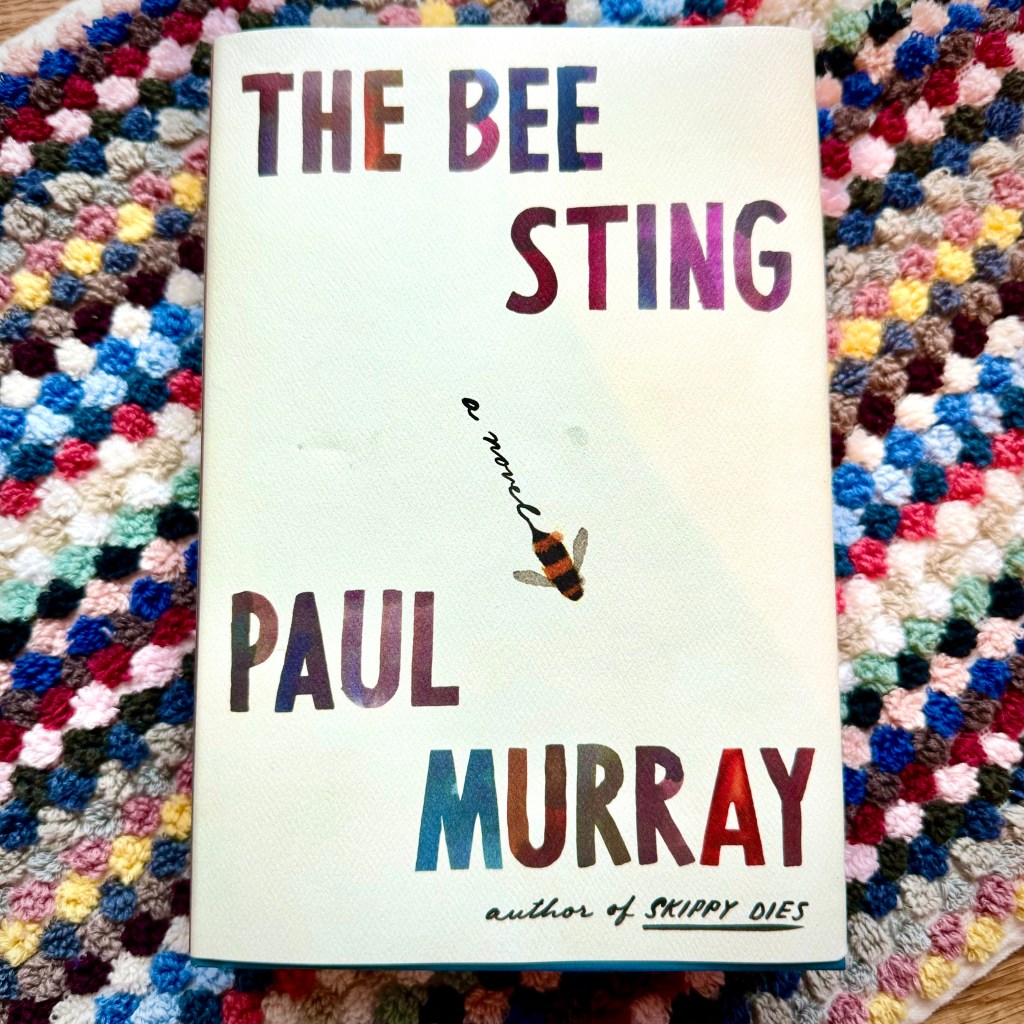
As I type this, I’m still reeling from the end of this book. I’ve read Murray’s writing before (Skippy Dies and The Mark and the Void), so I knew what I was getting into, but man oh man. I think I can confidently say that this is Murray’s best work yet.
A queer mix of shame and loneliness pervades the entirety of The Bee Sting, accompanied by a cloud of “it’s inevitable, and therefore not worth talking about.” It’s a family tragedy built up out of the small blows we deal to one another every day, whether the victim knows they’ve been injured or not. Murray’s writing is spectacular, and his construction of the novel the best he’s ever done. There are so many moments when you realize how the puzzle pieces are going to slot into place and change your understanding, just before the penny drops. There were sections of this book where I tore through 200 pages in a day.
In some ways, Dickie is the main character, because his story has the most turning points and the most kept hidden from the rest of the family. In some ways it’s Imelda, because every event in every plot seems to inevitably involve her. In some ways it’s Cass and PJ, because their stories are the ones that have the most wide-open potential at the end of the novel. But really, the family as a whole is the main character, because the things they wrongly believe and the stories they don’t tell each other are as critical plot points as the things that actually happen in the novel.
The Bee Sting is a book I’ll be thinking about for a long time, and I’d be shocked if it didn’t make my list of the 2024 favorites. Highly, highly recommend.
 Words Per Mile