
Anything But
Abstract (Psychopomp)
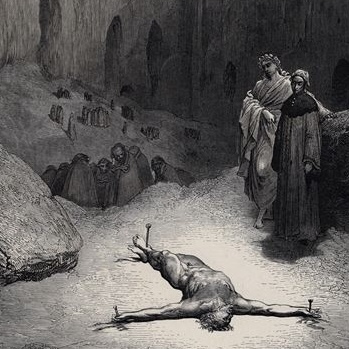
The eighth circle (Cantos 18-31!) is for those who have committed the sin of fraud. These shades include hypocrites (including Caiaphas, who sentenced Jesus to death), false flatterers, and seducers, and the latter two, especially, resonate with the lyrics of Anything But.
(Side note: more mentions of bodies of water, and second reference to the Liffey on the album.)
Anything But is full of promises about ways the narrator will protect or save the person he’s singing to. But they’re all things he can’t do! There’s lots of “If I…If I…If I…I would…I would…I would…” There’s no “I can,” “I will,” or any action he’s actually taking now for his love.
He even says that, if he were something else, he could do so many things for her, but he doesn’t want to be something else. He doesn’t want to be “anything but” what he is, making promises to someone that he knows he can never fulfill. While the lyrics fit more obviously with false flatterers and seducers, there’s a tinge of hypocrisy in there, too. Haven’t we all been wooed by someone (romantically or otherwise) that we eventually realize is all talk?
The other song in this circle, Abstract (Psychopomp) is a little more obtuse to me. Let’s start with the definition of the word. A psychopomp refers to a guardian who guides shades from the land of the living into the land of the dead—someone like Charon, who we saw several circles ago. Charon isn’t present in this section of Dante’s tale, but the idea of a psychopomp relates to the experience that Hozier reportedly based this song on:
“It is the compassion that’s in the act of running into traffic to try to pick an animal or somebody’s pet up from a road after it has been hit… The fragility of one person who ran into that traffic and absolutely put themselves into the position of being mashed by those cars as well. The song is just reflecting on this moment of compassion in this very cold and brutal space and how much admiration you can have for that.”
This song, then, appears to be a compassionate take on the beings that shepherd these souls to the afterlife, regardless of whether they’re good souls or it’s a good afterlife. The singer watches the psychopomp care for the dying souls, even as the souls are about to be trapped in a circle of torment, to be watched from a distance by those visiting Hell:
Darling there’s a part of me
I’m afraid will always be
Trapped within an abstract from a moment of my life
Shortly after these lines, Hozier repeats “See how it shines,” which is repeated frequently in the song. The shining is literally the eyes of the dying animal, and the tear of the psychopomp, but the thing that shines in Dante is the fire that these sinners (including Ulysses) are trapped in, which Dante and Virgil observe from above. All of these things shine and are beautiful in their own way, even if the ends are considerably darker.
But who are ye, in whom the trickles down
Along your cheeks, such grief as I behold?
And what pain is upon you, that so sparkles?
Maintaining literal distance while feeling compassion, seeing beauty in pain…perhaps these ideas aren’t literally hypocritical, but they have a similar feel and seem to represent a more sympathetic take on two conflicting things being true at the same time. What do you think?
← Chapter 7: Violence
Chapter 9: Treachery →
 Words Per Mile
Leave a comment